


Asbestos Testing: What to Know Before Renovating Your Home

Updated: Sep 1

Renovating your property can be an exciting process, transforming your house into a home. Unfortunately, renovations are not often without their challenges. Asbestos is one key problem to be aware of, as inhalation of its fibres can cause serious health issues. This guide will aim to explain everything you need to know about asbestos testing, and why it’s essential for home renovations.
Understanding Asbestos
While you may have heard of asbestos, you might not know everything you need to prevent yourself from its dangers and detect it in your home. Below, we’ll explore some key information about asbestos, including its properties and the main types.
Asbestos Properties
Asbestos's widespread use in construction stemmed from a unique combination of desirable properties. Asbestos is resistant to various types of degradation, including high temperatures, fire, chemical reactions and biological decay such as rot or mould. The material itself is fibrous, giving it the potential for flexibility and strength, allowing it to suit various building applications.
Types of Asbestos
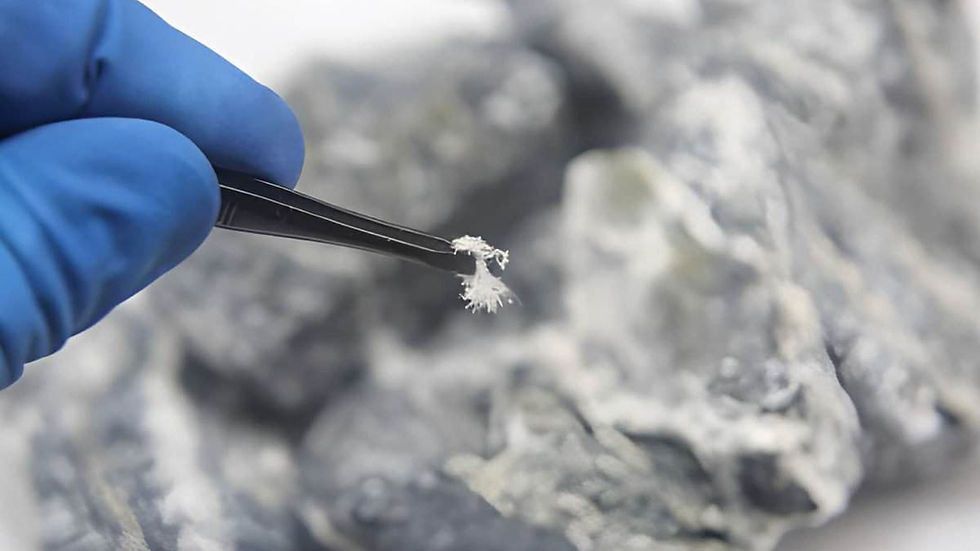
Asbestos comes in two key categories, known as serpentine asbestos and amphibole asbestos. White, or chrysotile asbestos, is the only type of serpentine asbestos. It’s made of curly fibres and is incredibly common across the world. Unfortunately, it can cause significant damage to human health.
Amphibole asbestos, on the other hand, has straight needle-shaped fibres and encompasses five types of asbestos. Blue asbestos, or crocidolite, is a key type, as it is the most dangerous type of asbestos. It has extremely fine, fibrous crystals, and an overall blue colouring. Another common type of amphibole asbestos is brown asbestos, also known as amosite. It has thin, rod-shaped fibres, and was used in various products including insulation and ceiling tiles.
Associated Risks and Health Concerns
Asbestos is no longer used in construction, as it was discovered that asbestos can actually be incredibly harmful. When damaged, the fibres that might be released from the material can be breathed in. As a carcinogenic, inhalation of asbestos fibres can induce cancer. It can also cause a condition known as asbestosis to develop, which can significantly impact the lungs and heart.
As a result of the discovery of the potential harm asbestos fibres can cause if inhaled, asbestos was banned from being imported. Since 1985, the blue and brown asbestos varieties have been banned from being imported to the UK. The asbestos ban was also extended in 1999 to include white asbestos.
The Uses of Asbestos
As a result of its key properties, asbestos seemed to make an ideal material for various applications. While we know now that this is not the case, and the health risks far outweigh its benefits, asbestos can still be found in a range of buildings. One of the most popular uses of asbestos was for insulating buildings, meaning that many older properties may still contain asbestos without the owners being aware. That’s where experts step in, preventing the asbestos within homes from being disturbed and removing it safely before renovations can begin.
Asbestos in Your Home
Discovering asbestos in your home can be a concerning situation. It's important to be well-informed to protect your health and make sound decisions about how to proceed. The following information outlines essential points to consider when dealing with asbestos in a residential setting, helping you navigate the situation safely and effectively.
Safety
If professionals have detected asbestos in your home, staying safe around this material is important until it can be dealt with. Make sure never to interact directly with the asbestos, as even minor disturbances can release microscopic fibres into the air, making them easy to inhale unknowingly. You should always leave all needed inspections to equipped experts, who are skilled in minimising the harm asbestos can cause.
Your Asbestos Options
If asbestos has been discovered in your property, you will likely have a few options. Firstly, the asbestos can be left untouched in your home. If previously undisturbed and unlikely to become disturbed in the future, asbestos is unlikely to pose a threat to the inhabitants and could be more risky to remove.
Another option if asbestos is discovered is to remove it entirely. This will be a necessity if your renovation project requires demolishing the areas in which the asbestos has been found. It’s important not to attempt to remove asbestos yourself, as you could cause serious harm to yourself. Instead, let a professional asbestos team help, who have the experience and expertise required to safely remove the material from a building.
The Asbestos Testing Process
If you’re concerned about the possibility of asbestos hiding in your home, you will need asbestos testing services. These services allow asbestos specialists to investigate your property for signs of asbestos, and take samples of any suspicious materials to confirm its identity as asbestos. Below, you can discover everything you need to know about asbestos testing, from first identification to laboratory testing.
Visual Inspections and Identification
When professionals arrive at your home, the first thing they will do is carry out a visual inspection of the possible areas in which asbestos could be. Here, they will be able to identify which materials might contain asbestos, allowing them to analyse them further. Their expertise will help them single out suspicious materials quickly, helping to streamline this stage of your renovation process.

Material Sampling
Once the suspicious materials have been identified, the professionals can sample them. A small piece of the material will be removed by the professionals, using specialist tools that help to minimise the disturbance to the material. This can help to prevent fibres from releasing if the material is indeed asbestos. The samples will then be carefully transported to minimise hazards, and their destination is a specialist laboratory.
Sample Analysis
Once the sample has arrived for testing, scientists and other specialists can begin the testing process. The experts will use key testing methods such as stereo-microscopy, polarised light microscopy and dispersion staining. The experts will use these processes to help them look for key indicators that the material is asbestos, looking for the specific appearance and properties of asbestos.
Air Quality Testing
An optional but often encouraged step in asbestos identification and testing for the home is air testing. Air samples will be collected from specific rooms in the home, which can then be analysed for fibre. If the levels indicate the presence of asbestos, the specialists can then determine the next steps.
Other Essentials for Safe Renovations
Asbestos is not the only hazardous or harmful material that might be found in an older property during the renovation process. Make sure to check your property over for any structural issues before carrying out renovations, as structural problems can result in collapse and pose several risks. Consult an expert if you are concerned about structural issues impacting your renovation project beforehand.
Additionally, silica dust, otherwise known as respirable crystalline silica, can be a significant risk to construction workers during large renovation projects. Extensive and prolonged exposure to this material can cause severe respiratory conditions, including lung cancer. Silica is commonly found in construction materials, such as bricks and tiles, so cutting and drilling can produce dust. Make sure to always wear the right personal protective equipment on-site, that can prevent you from inhaling silica dust, and to use knowledgeable construction teams.
Our Services at MD Asbestos Solutions Ltd
Based in Farnborough, MD Asbestos Solutions Ltd is a trusted provider of asbestos solutions. Our specialists carry out laboratory-backed asbestos testing to confirm exactly what you're dealing with. Where asbestos is found, our fully licensed asbestos removal safely encloses and extracts asbestos-containing materials from your property. We then handle compliant asbestos collection and disposal, taking the waste away under the correct duty-of-care paperwork. We work throughout the South East, including asbestos removal in Berkshire to the north. Our coverage also extends across asbestos removal in Surrey — covering Guildford, Camberley, Woking and Dorking — so don't hesitate to reach out today if you're concerned about asbestos hidden in your home.
If you’re interested in our expert asbestos services, please visit the MD Asbestos Solutions Ltd website. Here, you can find detailed information about the services we offer our customers. Alternatively, please get in touch with us directly to discover more about us and our specialist services.


Comments